









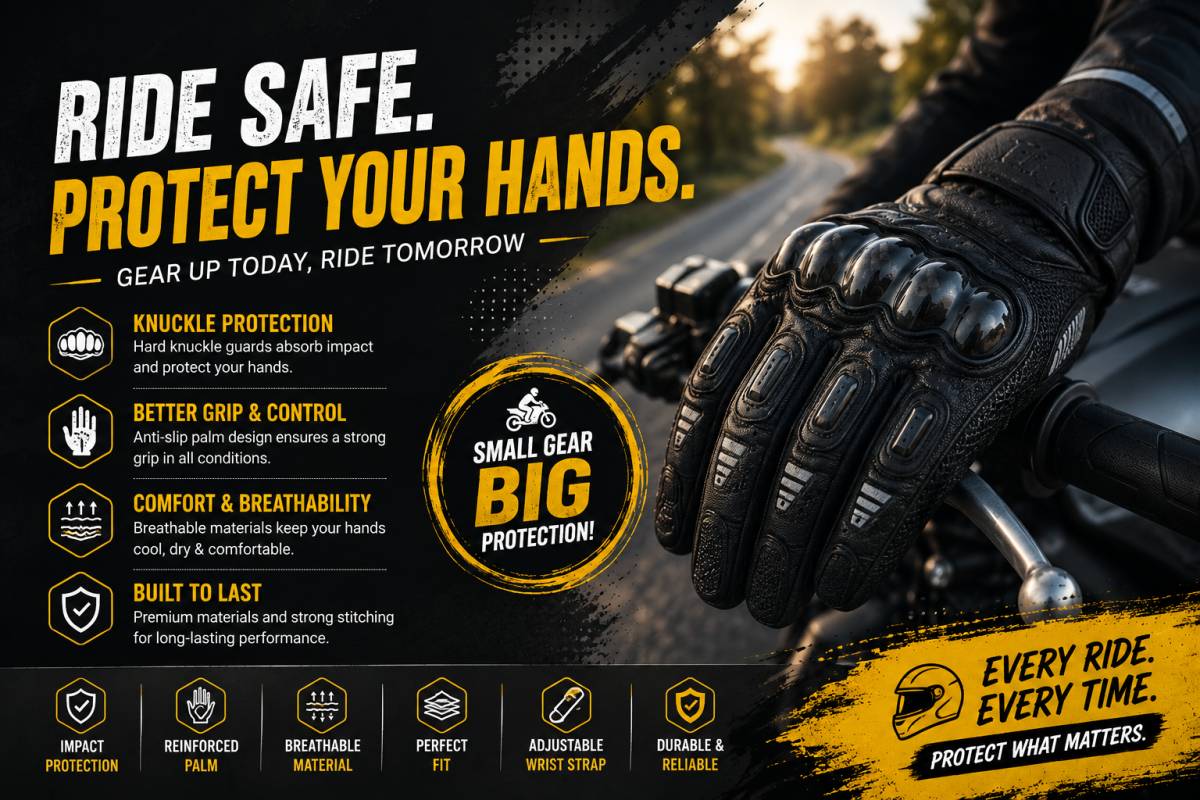
When riding a motorcycle, most riders think about wearing a helmet first—and they should. But there is another part of the body that deserves just as much attention: your hands.
Your hands are constantly exposed while riding. They control the throttle, clutch, brake and other controls, but during a sudden fall, they can also become one of the first parts of the body to hit the road.
This is why motorcycle riding gloves are not simply an accessory. A properly designed pair of motorcycle gloves can help protect your hands from abrasion, impact and other injuries during a crash.
For riders in Bangladesh, where busy traffic, sudden braking, potholes, rain and slippery roads are common, wearing proper riding gloves can be an important part of everyday riding safety.
Why Do Motorcycle Riders Need Gloves?
A motorcycle gives you very little physical protection compared with a car. If you fall, your hands may instinctively move forward to protect your body.
This natural reaction is often called the “fall on an outstretched hand” mechanism.
During a crash, a rider's hands may:
- Hit the road directly
- Slide across rough asphalt
- Strike another vehicle or object
- Be exposed to debris
- Experience impact around the knuckles and fingers
- Lose grip or control during an emergency situation
A normal pair of cotton or fashion gloves is not designed to deal with these situations.
Motorcycle-specific protective gloves are designed and tested with mechanical protection in mind. The European EN 13594 standard, for example, covers requirements for protective motorcycle gloves, including mechanical properties, impact protection, sizing and testing methods.
1. Gloves Help Protect Against Road Abrasion
One of the biggest risks during a motorcycle fall is road rash.
When a rider falls while moving, the body can slide across the road surface. Asphalt is highly abrasive, so exposed skin can be damaged very quickly.
Your hands are particularly vulnerable because they may contact the road first.
A properly constructed bike riding glove provides a protective layer between your skin and the road.
EN 13594 includes specific testing for impact abrasion resistance. For Level 1 gloves, the standard specifies minimum abrasion-performance requirements, while Level 2 requires higher resistance.
This does not mean that gloves can make your hands completely injury-proof. No protective gear can guarantee that.
But quality protective gloves can provide a much stronger barrier than bare skin or ordinary fabric gloves.
2. Gloves Can Help Reduce Hand and Wrist Injuries
A motorcycle crash does not always happen at high speed.
A rider can lose balance while:
- Turning on a wet road
- Braking suddenly
- Avoiding a rickshaw or car
- Riding over loose sand
- Hitting a pothole
- Losing traction during rain
During a fall, the hands and wrists may receive significant force.
Research examining motorcycle protective clothing found that riders wearing motorcycle gloves had a lower risk of crash-related hospital admission compared with riders who were not wearing gloves.
That does not mean gloves prevent every injury. Instead, it provides evidence that motorcycle-specific protective clothing, including gloves, can contribute to reducing crash injury risk.
3. Knuckle Protection Matters
Look at the back of your hand.
The four knuckles are exposed and can easily take an impact during a fall.
That is why some motorcycle gloves include knuckle protectors made from protective materials.
EN 13594 specifically addresses impact protection for the knuckle area. For Level 2 gloves, knuckle impact protection is a mandatory requirement, while it is optional for Level 1 gloves when applicable.
So when choosing motorcycle hand gloves, don't look only at the design.
Look for features such as:
- Knuckle protection
- Reinforced palm
- Strong stitching
- Abrasion-resistant outer material
- Secure wrist closure
- Proper finger protection
4. Palm Protection Is Also Important
Many riders focus on the knuckles but forget about the palm.
During a fall, the palm may contact the road and experience intense friction.
For this reason, a good motorcycle glove should provide adequate protection around the palm and thumb area.
Reinforced palm construction can help provide an additional protective layer where abrasion is likely to occur.
This is especially important for riders who regularly travel through busy city roads or take longer highway trips.
5. Gloves Can Improve Grip and Control
Safety is not only about what happens after an accident.
Good riding gloves can also help while you are actually controlling the motorcycle.
Sweaty hands can make the handlebar uncomfortable to hold, particularly during Bangladesh's hot and humid weather.
Rain can create another problem.
Wet hands can reduce comfort and make it more difficult to maintain a consistent grip.
A properly fitted motorcycle glove can provide a more secure interface between your hand and the controls.
However, gloves should never be so loose that they interfere with throttle, brake or clutch operation.
Good fit is part of safety.
6. Short Rides Still Need Protection
One common mistake among riders is:
“আমি তো শুধু ৫ মিনিটের জন্য বের হচ্ছি।”
A short ride is still a motorcycle ride.
You can encounter an unexpected vehicle, pedestrian, pothole or slippery surface within a few hundred meters of your home.
So instead of thinking about distance, think about exposure to risk.
If you are riding a motorcycle, your hands are exposed—regardless of whether the trip is 2 km or 200 km.
For everyday riding, you can explore the DCSBD Hand Gloves collection and choose gloves suitable for your riding needs.
7. What Should You Look for When Buying Motorcycle Gloves?
Not every glove sold as a “bike glove” provides the same level of protection.
Before buying, consider the following features.
Protective Construction
Look for gloves specifically designed for motorcycle riding rather than ordinary winter, fashion or work gloves.
Knuckle Protection
Hard or impact-resistant knuckle protection can provide additional protection against impacts.
Reinforced Palm
A reinforced palm can provide additional abrasion protection in an area that may contact the road during a fall.
Secure Wrist Closure
The glove should stay securely on your hand.
A good wrist closure can help prevent the glove from coming off during an accident.
Strong Stitching
The construction of the glove matters.
A glove that tears apart during a crash cannot provide its intended protection.
Proper Fit
Your fingers should sit comfortably inside the glove without excessive movement.
The glove should not be so tight that it restricts normal hand movement.
8. Look for Proper Safety Standards
If safety is your priority, don't judge motorcycle gloves only by appearance.
For motorcycle protective gloves, EN 13594 is an important standard to know. It specifies requirements and test methods for protective gloves intended for motorcycle on-road use, including mechanical properties, impact protection, ergonomics and user information.
Some gloves may also display CE-related markings associated with their protective certification.
However, riders should check the actual product documentation and markings rather than assuming that a printed logo automatically means the product has been properly certified.
9. Motorcycle Gloves Are Not Just for Professional Riders
You don't need to be a professional rider to benefit from protective gloves.
They can be useful for:
- Daily commuters
- Delivery riders
- University students
- Office commuters
- Long-distance riders
- Highway riders
- Motorcycle tourers
In fact, daily riders may have more frequent exposure simply because they spend more time on the road.
10. Why Gloves Are Especially Useful in Bangladesh
Bangladesh has its own riding challenges.
A rider may face:
- Heavy traffic
- Sudden lane changes
- Rickshaws and pedestrians
- Potholes
- Loose sand
- Rainwater
- Slippery surfaces
- Extreme heat and humidity
- Long traffic congestion
Rainy conditions can be particularly challenging.
Wet roads can reduce traction, while wet hands can make riding uncomfortable. For Bangladeshi riders, therefore, motorcycle gloves should provide a balance between protection, ventilation, comfort and grip.
If you are looking for gloves for regular riding, browse the motorcycle hand gloves collection and consider the features that match your riding conditions.
Common Mistakes Riders Make
Wearing Ordinary Gloves
Winter or fashion gloves may feel comfortable, but they are not necessarily designed for motorcycle crash protection.
Choosing Gloves Only for Appearance
A stylish glove is not automatically a safe glove.
Buying the Wrong Size
Loose gloves can move around during riding, while extremely tight gloves can reduce comfort and control.
Ignoring the Palm
Knuckle protection is useful, but palm protection is also important.
Removing Gloves for Short Trips
A crash can happen even during a short ride.
Final Thoughts
Motorcycle riding gloves are one of the simplest pieces of protective equipment a rider can add to their everyday riding routine.
They can help protect the hands against abrasion and impact, provide better grip and comfort, and add another layer of protection during an unexpected fall.
They are not a replacement for careful riding, a certified helmet or other protective equipment. Instead, they are one part of a complete motorcycle safety system.
For everyday riders in Bangladesh, the best approach is simple:
Wear a proper helmet, ride responsibly, and don't leave your hands unprotected.
If you're looking for motorcycle gloves for daily commuting, highway riding or touring, explore the DCSBD Hand Gloves collection and choose a pair based on fit, protection, comfort and your riding needs.
A good pair of motorcycle gloves may seem like a small investment—but when something unexpected happens on the road, that small layer of protection can matter.


Leave a Comment
Please log in as a customer or dealer to leave a comment on this article.
Log In