


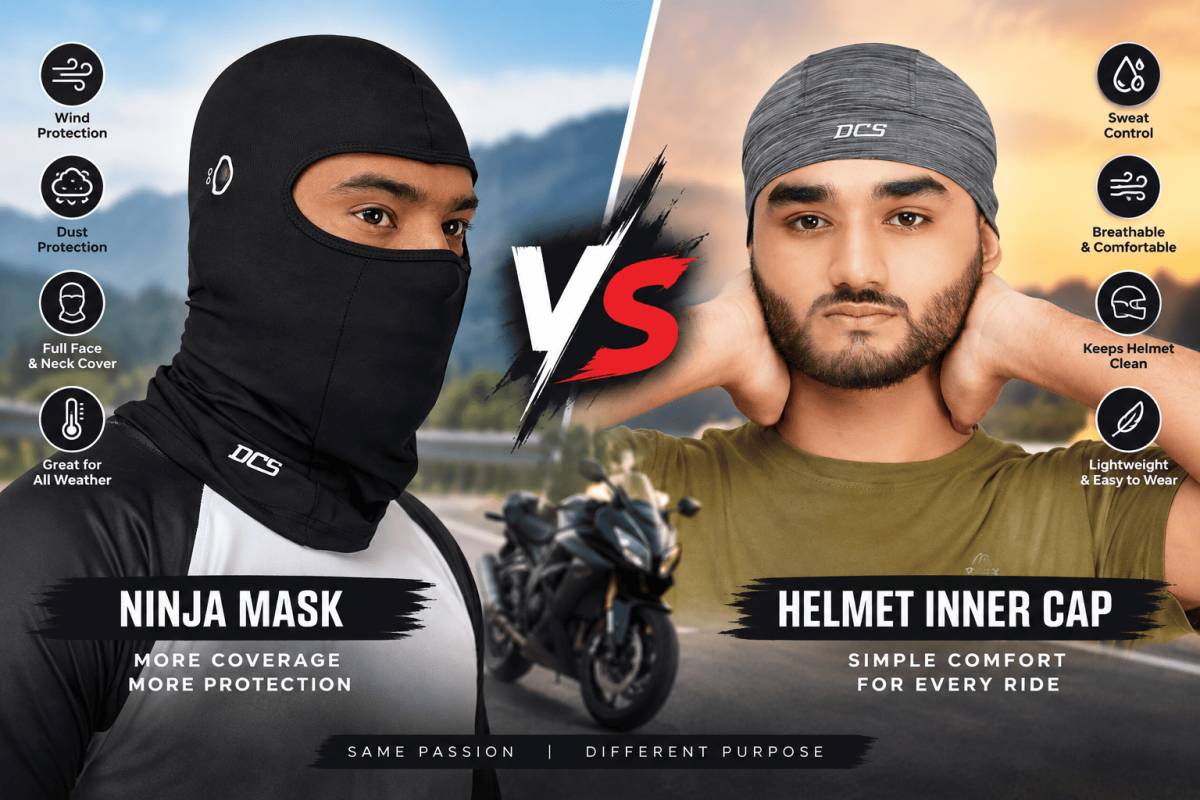
For motorcycle riders, wearing something under the helmet can make riding more comfortable, especially in hot, dusty or windy conditions. Two common options are a helmet inner cap and a ninja mask (balaclava).
Although they may look similar, they are designed for slightly different purposes. A helmet inner cap mainly focuses on the head and helmet area, while a ninja mask generally provides more coverage around the head, neck and face.
So, which one should a biker choose?
The answer depends on your riding conditions and what you need from the accessory.
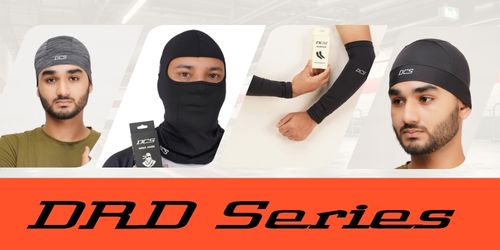
If you're looking for more motorcycle riding accessories, you can also explore the DRD Rider Series at DCSBD.
What Is a Helmet Inner Cap?
A helmet inner cap is a thin fabric layer worn underneath a motorcycle helmet. Its main purpose is to improve comfort and help manage sweat between the rider's head and the helmet liner.
A suitable inner cap can also help reduce direct contact between sweat, hair and the helmet's interior, making regular helmet cleaning and maintenance easier.
For riders in Bangladesh's warm and humid conditions, this can be useful during daily commuting and longer rides.
However, an inner cap is not a replacement for a motorcycle helmet and does not provide crash protection. The helmet itself must still fit correctly and be worn properly.
Who May Prefer a Helmet Inner Cap?
A helmet inner cap can be a practical choice if you mainly want:
- Better head comfort
- Sweat management
- A simple layer under the helmet
- Improved helmet hygiene
- Less facial coverage
- A lightweight accessory for daily commuting
👉 Check the DCS Helmet Inner Cap (Regular)
What Is a Ninja Mask?
A ninja mask, commonly called a balaclava, is a fabric head and face covering worn underneath a helmet.
Depending on its design, it can cover the head, ears, neck and part or most of the face.
For motorcycle riders, a ninja mask can help reduce direct exposure to wind and can provide a comfortable layer between the skin and helmet. It can also help manage sweat and reduce direct contact between dirt, sweat and the helmet liner.
However, a regular motorcycle ninja mask should not automatically be considered respiratory protection or certified protection against air pollution. Its actual protection depends on the material and design.
Who May Prefer a Ninja Mask?
A ninja mask can be useful if you want:
- More face coverage
- Additional neck coverage
- Protection from direct wind exposure
- Better coverage during dusty rides
- A comfortable layer under the helmet
- More coverage during cooler weather
👉 Check the DCS Ice Silk Ninja Mask
Helmet Inner Cap vs Ninja Mask
| Feature | Helmet Inner Cap | Ninja Mask |
|---|---|---|
| Main purpose | Head and helmet comfort | Head, face and neck coverage |
| Head coverage | Yes | Yes |
| Neck coverage | Usually limited | Usually more coverage |
| Face coverage | Usually no | Usually yes |
| Sweat management | Yes | Yes |
| Wind protection | Limited | Better face/neck coverage |
| Helmet hygiene | Useful | Useful |
| Hot-weather use | Very practical | Depends on fabric and coverage |
| Cold-weather use | Limited | More useful |
| Crash protection | No | No |
Which One Is Better for Hot Weather?
For hot-weather daily commuting, a thin and breathable helmet inner cap can be a practical choice if your main goal is managing sweat and maintaining helmet comfort.
A lightweight ninja mask can also be suitable, but because it covers more of the face and neck, the comfort level depends heavily on the fabric, thickness and ventilation.
For riders who mainly want a simple layer under the helmet, the DCS Helmet Inner Cap (Regular) can be a suitable option to consider.
The important thing is not simply choosing the thinnest-looking product. The fabric should be comfortable and should not make the helmet fit incorrectly.
Which One Is Better for Dust and Wind?
If your main concern is wind exposure around the face and neck, a ninja mask generally offers more coverage than a basic inner cap.
A balaclava can create a fabric barrier between the skin and the riding environment, which can make windy or dusty rides more comfortable.
For riders who want additional coverage around the face and neck, the DCS Ice Silk Ninja Mask is an option to consider.
But riders should not assume that a normal ninja mask filters harmful particles like a certified respirator. For air-pollution protection, the product would need appropriate filtration specifications and certification.
Which One Is Better for Helmet Hygiene?
Both can be useful.
A fabric layer can reduce direct contact between sweat, skin and the helmet's internal liner. This can be particularly useful for riders who use their helmet frequently.
The advantage of an inner cap is that it usually covers less of the face and can be easier to wear for everyday commuting.
A ninja mask provides more coverage, so it may be preferable for riders who want a layer between more areas of their skin and the helmet.
If helmet hygiene and simple sweat management are your main priorities, you can check the DCS Helmet Inner Cap.
If you prefer greater face and neck coverage, you can check the DCS Ice Silk Ninja Mask.
Can You Wear Both?
Yes, but there is usually no need to wear both at the same time.
Wearing multiple layers underneath a helmet can change how the helmet fits. A thick or folded layer may create pressure points or affect how securely the helmet sits.
Therefore, if you use an inner cap or ninja mask, put it on smoothly and check the helmet fit with that exact layer.
The helmet should remain snug and stable with the accessory in place.
Which One Should a Biker Choose?
Choose a Helmet Inner Cap If:
- You mainly want sweat management.
- You want a simple layer under the helmet.
- You ride mostly in warm weather.
- You prefer less facial coverage.
- Helmet hygiene is your main concern.
- You want a lightweight accessory for daily commuting.
👉 Shop DCS Helmet Inner Cap (Regular)
Choose a Ninja Mask If:
- You want more head, face and neck coverage.
- You regularly ride in windy conditions.
- You want additional coverage around the neck and face.
- You ride in changing weather conditions.
- You prefer a balaclava-style fit.
- You want more coverage against direct wind and dust.
👉 Shop DCS Ice Silk Ninja Mask
Neither option is universally better. The right choice depends on the rider's needs, weather conditions and personal comfort.
Important Helmet-Fit Consideration
This is one of the most important things to remember.
Do not use an inner cap or ninja mask to compensate for an incorrectly sized helmet.
A thick layer can make a helmet feel tighter, while a slippery or poorly fitted layer can affect how the helmet sits.
The helmet should remain snug and stable with the accessory in place.
If you are trying either accessory for the first time, check the helmet fit carefully before starting your ride.
Why Choose Motorcycle Riding Accessories from DCSBD?
The right riding accessories can make everyday motorcycle riding more comfortable and convenient.
At DCSBD, riders can explore different products designed for everyday riding needs.
You can check the DCS Helmet Inner Cap (Regular) if you mainly need a lightweight layer for helmet comfort and sweat management.
For greater face and neck coverage, you can check the DCS Ice Silk Ninja Mask.
You can also explore the complete DRD Rider Series to discover more motorcycle riding accessories.
Final Thoughts
Both helmet inner caps and ninja masks can be useful motorcycle accessories, but they serve slightly different purposes.
A helmet inner cap is generally better for simple head comfort, sweat management and helmet hygiene, while a ninja mask provides greater coverage around the face and neck and can be useful for wind and weather comfort.
Neither is protective equipment in the same way as a certified motorcycle helmet or impact protector. Their main benefits are comfort, coverage and hygiene.
For everyday riders in Bangladesh, the best choice is the one that matches your riding conditions while keeping your motorcycle helmet properly fitted and secure.
Looking for a Helmet Inner Cap or Ninja Mask?
If you want a simple layer for helmet comfort and sweat management, shop the DCS Helmet Inner Cap (Regular).
If you prefer additional head, face and neck coverage, shop the DCS Ice Silk Ninja Mask.
You can also explore more motorcycle riding accessories from the DRD Rider Series.
Choose the right riding accessory for your comfort, weather conditions and everyday riding needs.




Leave a Comment
Please log in as a customer or dealer to leave a comment on this article.
Log In